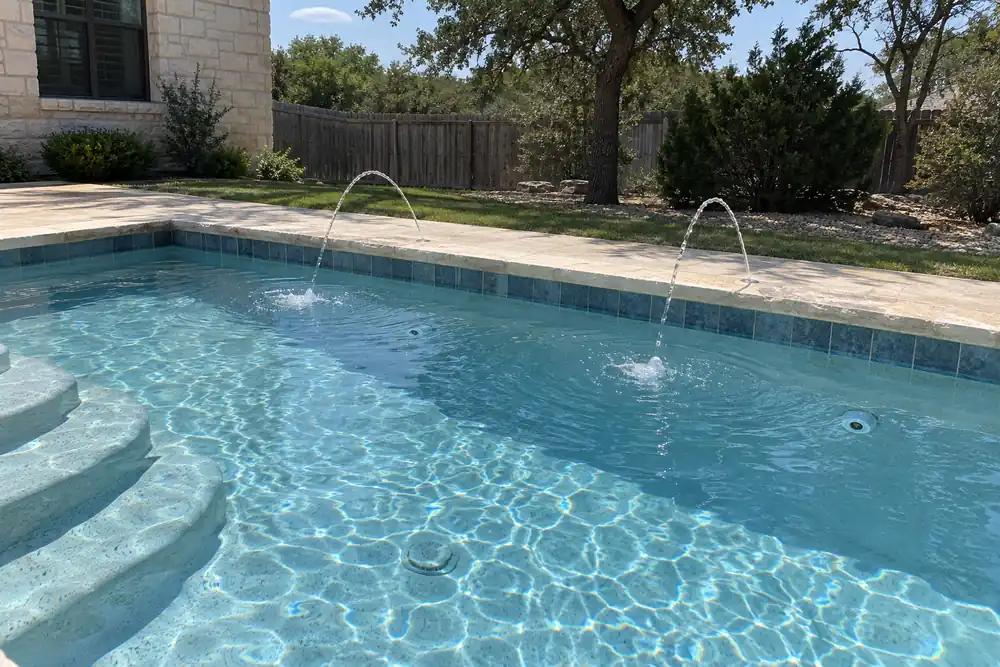
Killeen Pool Resurfacing: Commercial and Residential Pebble, Quartz and Plaster Finishes
Serving Killeen, Texas
Killeen Pool Resurfacing provides pool resurfacing in Killeen, Texas, for backyard pools and for apartment, HOA and other commercial pools, from commercial resurfacing and pool remodeling to pebble and quartz finishes, fiberglass gelcoat, white and colored plaster, waterline tile, pool paint, deck coatings and vinyl liners. More than half of Killeen's homes were built before 2000, according to the U.S. Census Bureau's 2020–2024 survey, and the National Plasterers Council rates a traditional white plaster surface at 5 to 8 years, quartz at 10 to 15 and pebble at 12 to 18.
An estimate is free. We look at the old finish, the tile line and the shell, then talk through which surface suits the pool and the water it will hold: moderately hard, chloraminated water that Bell County WCID No. 1 treats from Belton Lake and Stillhouse Hollow Lake. Calls and estimate requests are answered 24/7 across Killeen, Harker Heights, Copperas Cove, Belton, Temple and the towns around them.
No charge · answered 24/7
Get free estimates
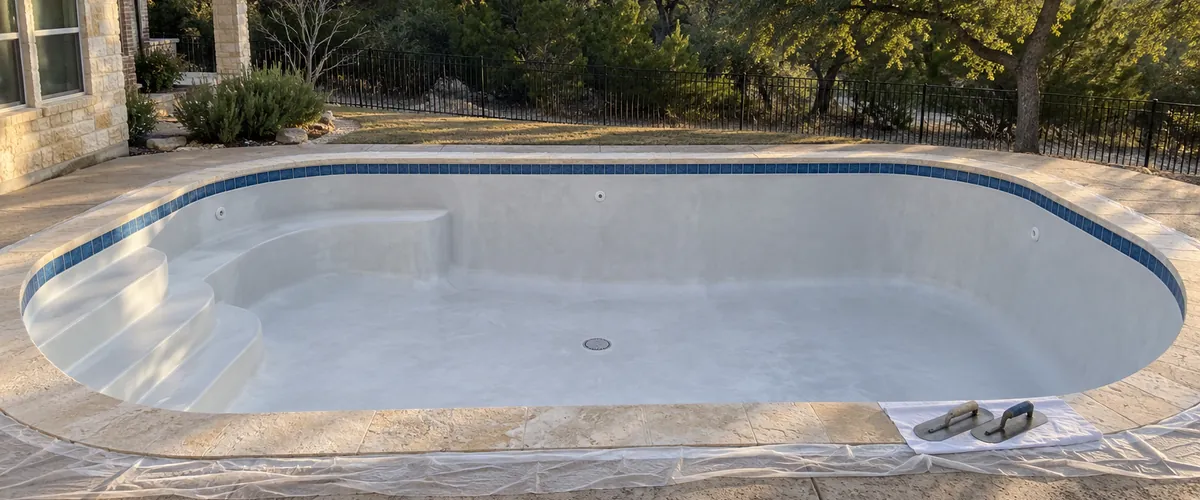
Why choose Killeen Pool Resurfacing for pool resurfacing in Bell County
Free estimates before any work is booked
Describe the pool and what's wrong with it by phone or through the form, and the estimate costs nothing. Published price ranges only go so far: a real figure depends on the pool's size, how easy it is to reach and what turns up once the old finish is sounded.
Calls answered 24/7
Calls and estimate requests are answered around the clock, weekends included, so a question about a stain, a hollow spot or a half-drained pool doesn't wait for Monday.
Backyard pools and shared pools
Plaster, quartz, pebble, fiberglass and vinyl backyard pools, plus the apartment, condominium, HOA and hotel pools that Texas health rules treat as public pools.
Finishes talked through for the local water
We'll talk through how each finish copes with water that carried an average chloramine residual of 2.01 ppm in the City's 2025 report, and with the 28-day start-up the National Plasterers Council sets for a new finish.
Call or request a free estimate any time, 24/7.
Get free estimatesResidential pool resurfacing: pebble, quartz, plaster, fiberglass, paint and vinyl
Each kind of pool has its own refinish: a cement-based finish over a gunite shell, gelcoat work on fiberglass, paint over worn masonry, and a new liner in a vinyl pool.
Pebble pool finishes
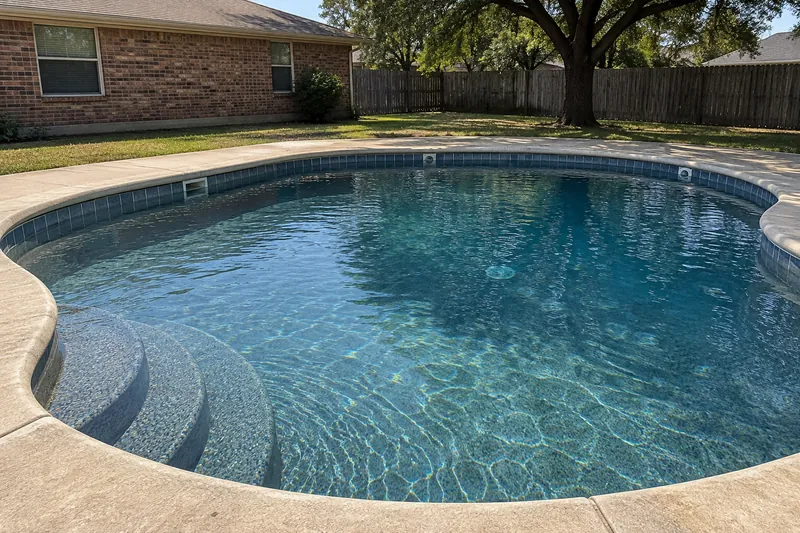
Small pebbles, glass and pigmented cement are troweled hard, compacted and then exposed. The National Plasterers Council calls pebble the most durable surface available, because river pebble is chemically inert. Pebble Technology International's range runs from the coarse original PebbleTec through PebbleSheen to PebbleFina, its smoothest.
Textures, start-up targets and published prices are on the pebble pool finishes page.
Quartz pool finishes
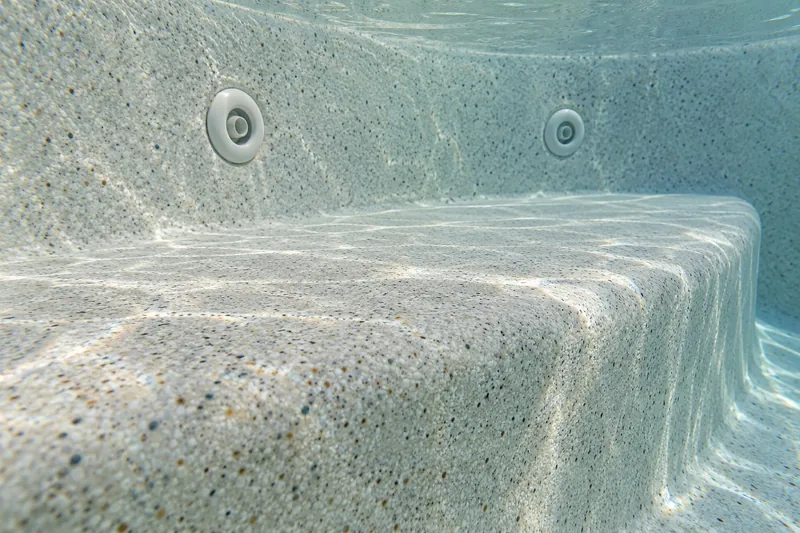
Quartz is a silicate mineral aggregate that doesn't react with pool chemicals, and the Council says colored ceramic quartz makes a far harder, more chemical-resistant surface than standard plaster. SGM's Diamond Brite blends quartz with polymer-modified cement, which the maker says raises hardness and cuts water penetration.
Fiberglass gelcoat resurfacing
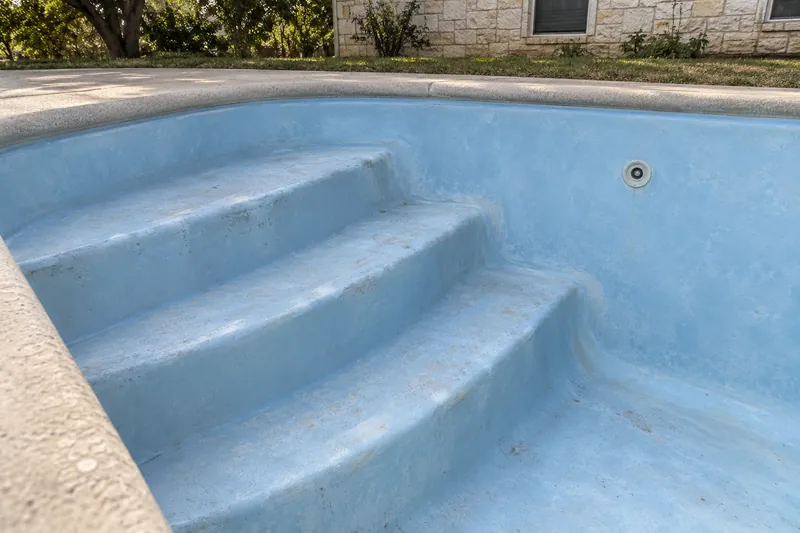
Gelcoat is the colored resin layer you see and touch on a fiberglass pool; River Pools sprays its gelcoat 25 to 30 mils thick. That maker says a fiberglass pool is usually 20 or 30 years old before it needs refinishing, while a coating maker puts the first signs of wear at 10 to 15 years of regular use.
White and colored plaster
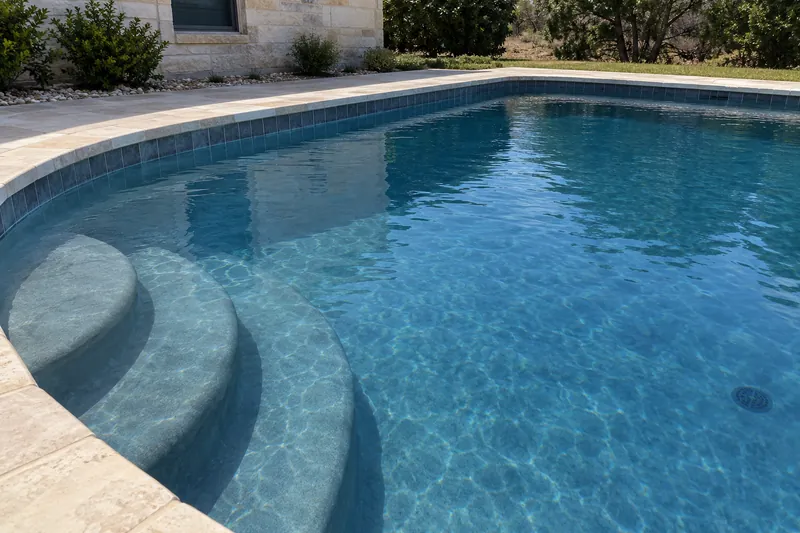
White plaster is white cement, white marble aggregate and water: the most affordable finish, and very smooth underwater. Colored plaster shows mottling and streaks more readily. The same plastering standard covers permanently installed concrete spas.
Bond coats, start-up and refill rules are on the pool replastering page.
Pool painting
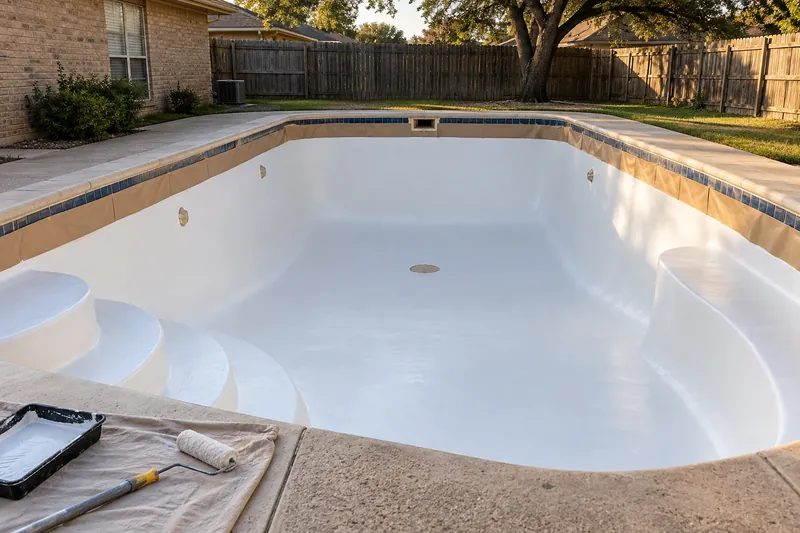
Ramuc says any unpainted masonry pool can take rubber, epoxy or acrylic pool paint, and fiberglass pools call for epoxy. Service lives depend on the paint: Kelley Technical Coatings' Olympic line gives acrylic enamel and rubber paints 2 to 3 years and epoxy 5 to 8.
Vinyl liner replacement
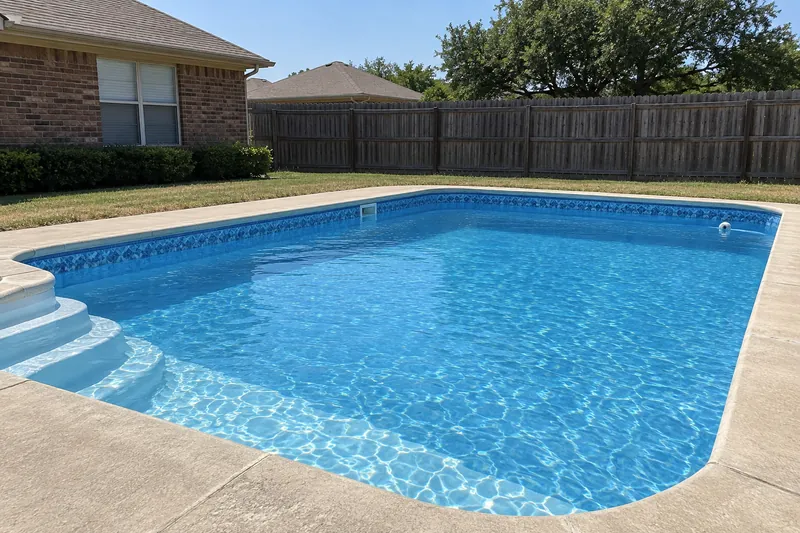
Latham lists four signs a liner is due: cracks, tears or wrinkles; fading so heavy the pattern is lost; slippage out of the track; and a bead that has come loose. Liners come in 20 or 27 mil vinyl, and liner makers measure thickness in mils, not gauge.
Call or request a free estimate any time, 24/7.
Get free estimatesCommercial pool resurfacing for apartments, HOAs and hotels
About half of Killeen's occupied homes are rented (50.5% in the Census Bureau's 2020–2024 survey), and the pools at apartment complexes, HOAs and hotels follow Texas public-pool rules that a backyard pool never meets. Commercial pool resurfacing works to those rules on finish color, tile markings, drain covers and closures.
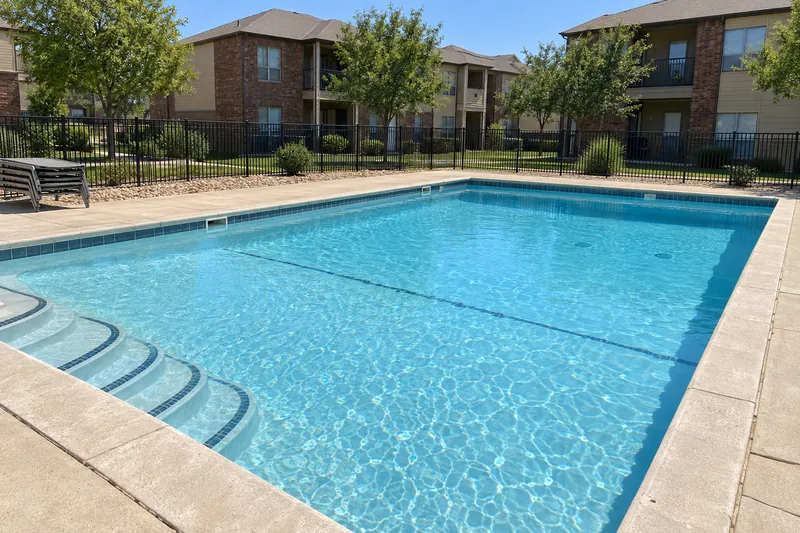
Shared pools are public pools in Texas
The Texas Department of State Health Services treats a pool serving no more than two resident families as residential. Pools run with apartments, condominiums, hotels and property owner associations are Class C public pools; pools open to the general public are Class B.
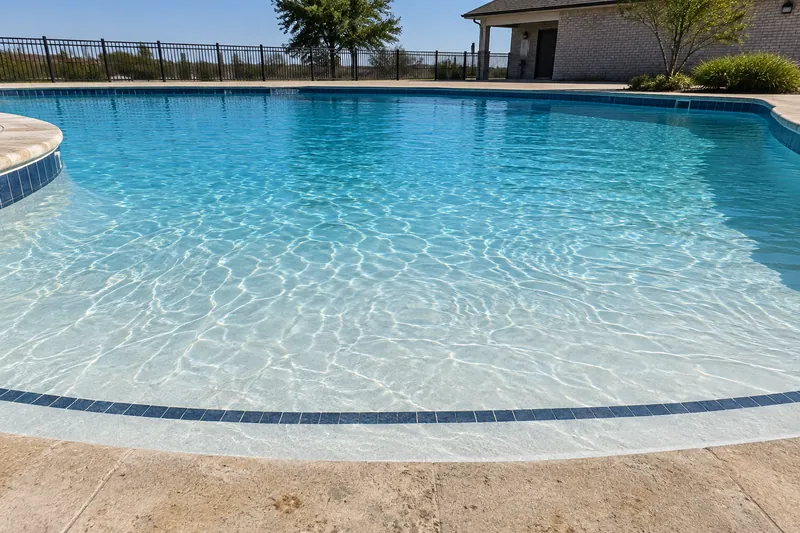
Light finishes and slip resistance
For public pools, the 2024 International Swimming Pool and Spa Code, which Killeen has adopted, requires a white or light-colored floor and wall finish of at least 8.0 on the Munsell gray scale; the 2021 edition set 6.5. The code also requires surfaces people stand on in a public pool to be slip resistant.
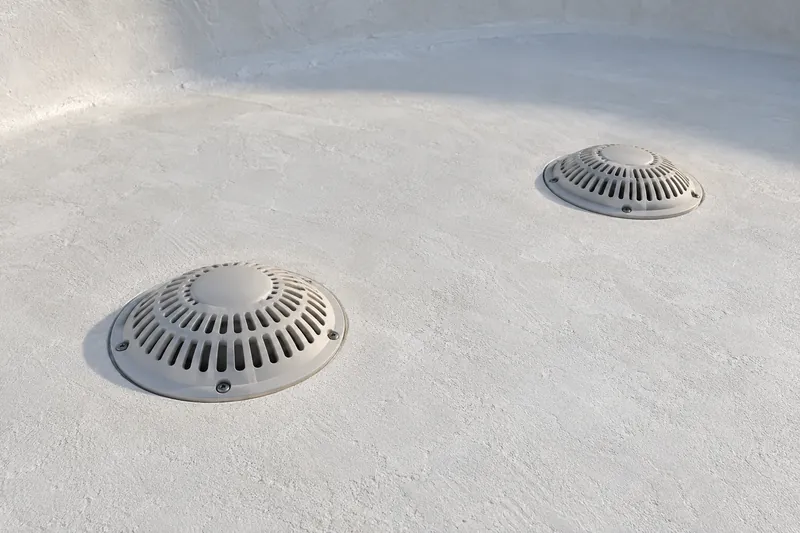
Drain covers under the VGB Act
The federal Virginia Graeme Baker Pool and Spa Safety Act, in force since December 19, 2008, requires anti-entrapment drain covers on public pools, plus a backup such as a safety vacuum release system where there is a single main drain. The Consumer Product Safety Commission advises replacing covers past the date marked on them.
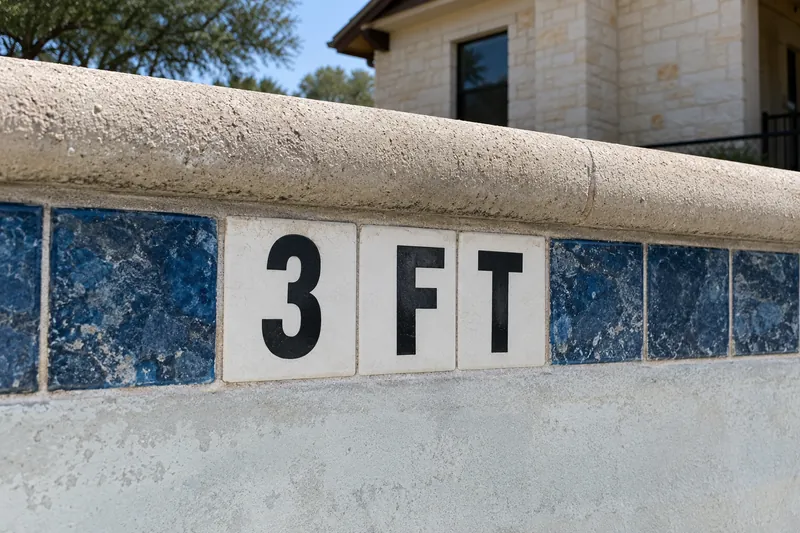
Depth markers and deep-end tile lines
Texas requires a contrasting row of floor tile at least 4 inches wide where a Class B or C pool over 5 feet deep changes from shallow to deep, and depth markers in the top 4-1/2 inches of the wall, just under the coping.
Call or request a free estimate any time, 24/7.
Get free estimatesPool remodeling, tile, coping and deck work
Pebble Technology International notes that a remodel usually does the pool finish and the waterline tile at the same time. The jobs below change the shell, its edge or the deck around it.
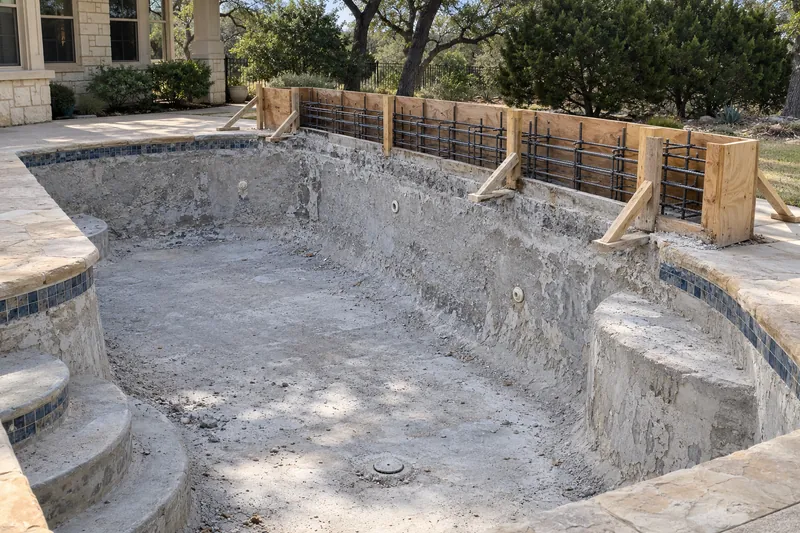
Pool remodeling and renovation
Reshaping a pool means placing new shotcrete against old. The American Shotcrete Association says it bonds well when the old surface is roughened to about 1/16 inch, cleaned and brought to a saturated surface-dry state, and it advises against any bonding agent between the two.
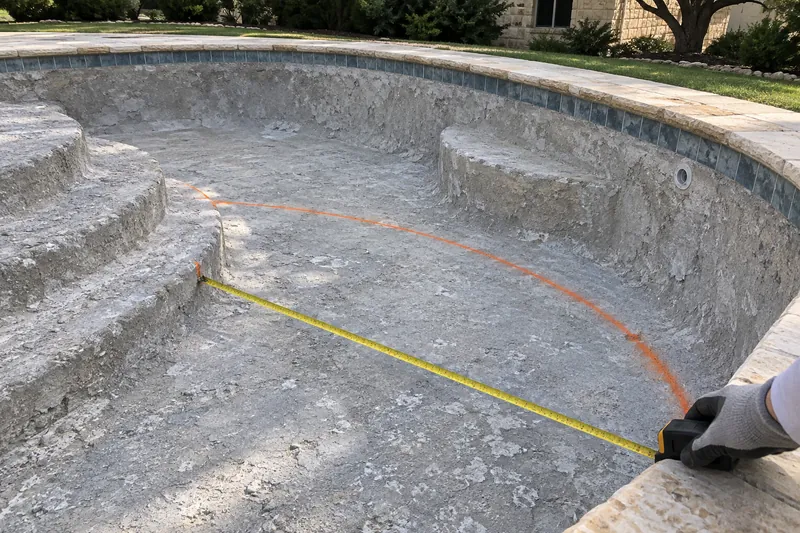
Tanning ledges, steps and benches
The in-pool furniture maker Ledge Lounger says tanning ledges, sun shelves and baja shelves are typically 6 to 9 inches deep. For residential pools, the code keeps underwater seats, benches and swimouts no more than 20 inches below the design waterline.
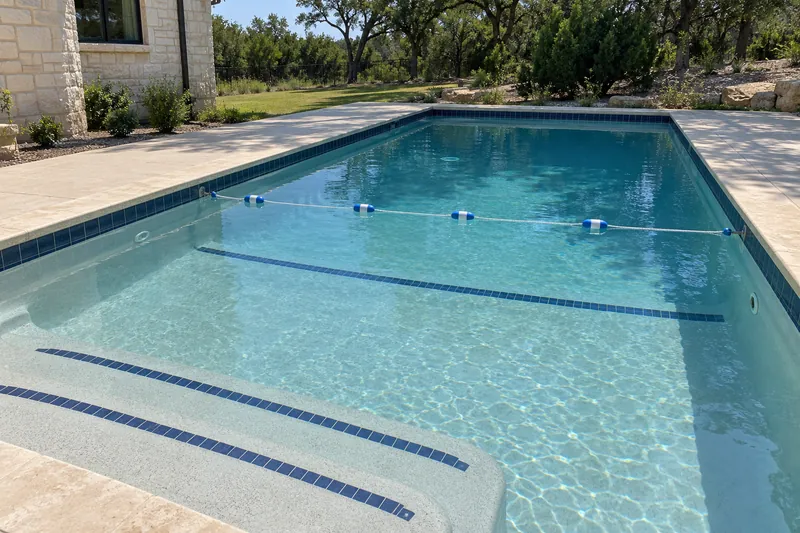
Diving pool conversion
The International Swimming Pool and Spa Code classes a nondiving residential pool as Type O and allows no diving equipment on it. Its smallest residential diving types need 6 feet of water at Point A and 7 feet 6 inches at Point B.
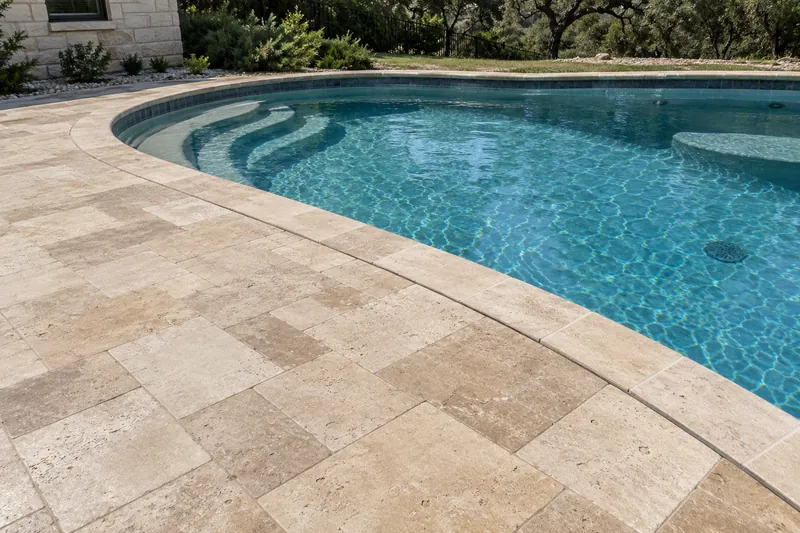
Coping replacement
Coping is the edge between the pool shell and the deck, built to stop water getting behind the shell and to send splash toward the deck drains. It is poured in place, precast as stone or pavers on a mortar bed over the bond beam, or formed by a cantilevered deck edge.
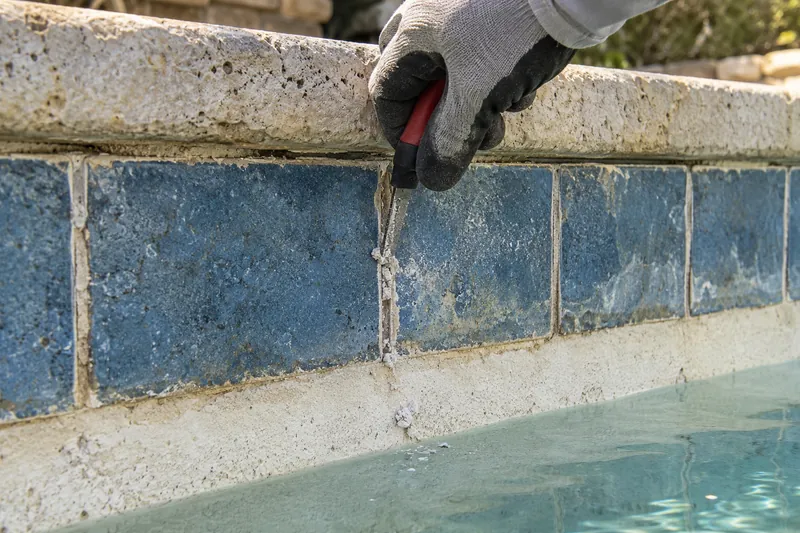
Waterline tile replacement
Tile sits at the waterline because it cleans up easily and survives the constant wetting and drying there. LATICRETE's pool guide allows only impervious tile, under 0.5 percent water absorption, or vitreous tile, under 3.0 percent.
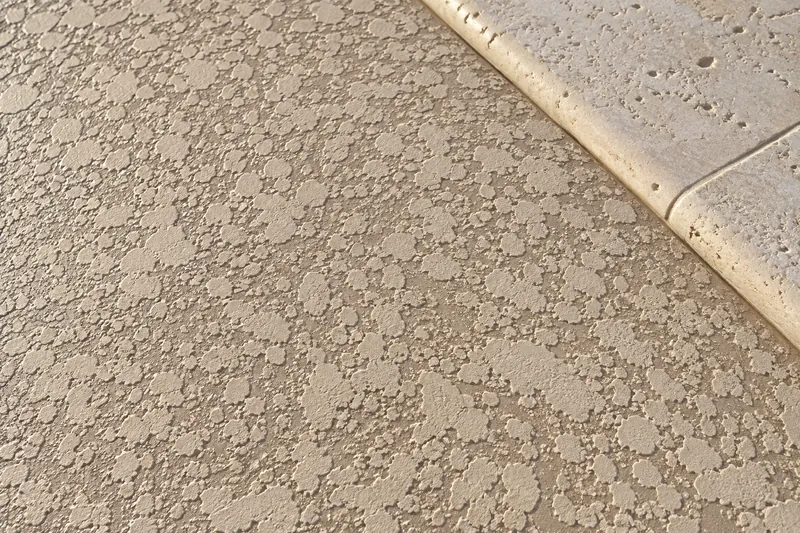
Deck resurfacing and joints
A spray-texture deck coating is sprayed on, knocked down with a trowel edge for grip and finished with two acrylic coats. SUNDEK keeps existing control joints open and replaces worn-out expansion joints when it coats a deck.
Call or request a free estimate any time, 24/7.
Get free estimatesHow a pool resurfacing job runs, from drain to start-up
Inspect and sound the old finish
A free estimate looks at the shell, the tile line and the old surface. Universal White Cement calls tapping in a grid the simplest field test: well-bonded plaster sounds crisp, delaminated plaster dull or drum-like.
Drain within the City's rules
Killeen's pool handout keeps chlorinated water out of storm drains and the street, and the stormwater ordinance lets only water dechlorinated below 0.10 mg/l total residual chlorine reach the curb. River Pools warns that groundwater can lift an empty shell, and leaves draining to professionals.
Prepare the shell
SGM's manual cuts out hollow plaster 3 inches past each hollow spot, undercuts the old finish 2 inches back from tile and fittings, kills algae with a chlorine wash, removes oil with trisodium phosphate and etches the shell with muriatic acid.
Tile and coping
When the job includes waterline tile or coping, LATICRETE's pool guide calls for setting materials rated for continuous water submersion.
Bond coat and new finish
Over sound old plaster, SGM's Bond Kote cures at least 6 hours before plastering. The finish coat is troweled 3/8 to 1/2 inch thick, inside the National Plasterers Council's average of 3/8 to 3/4 inch.
Fill without stopping
The fill hose lies at the deepest point with a clean cloth on its end and runs nonstop to mid-skimmer, because a break can leave a discolored ring. NPT says a fill can take 18 to 36 hours.
The 28-day start-up
The National Plasterers Council's card brings alkalinity to 80 to 100 ppm and pH to 7.2 to 7.6 on day 1, brushes the whole pool at least twice a day and runs the filter nonstop for seven days.
Call or request a free estimate any time, 24/7.
Get free estimatesPlaster, quartz, pebble and glass bead finishes compared
The National Plasterers Council gives each cement-based finish its own surface-life range, and what the finishes are made of explains the spread.
What each finish is made of
White plaster is white cement, marble aggregate and water. Quartz finishes add a silicate aggregate that doesn't react with pool chemicals. Pebble finishes compact and expose small pebbles and glass, and the Council's cautions are a slightly more textured surface and a higher cost. NPT's JewelScapes Classic, a glass bead finish, is 100% glass beads with white cement and colored pigment, and smooth to the touch.
Color and how the water looks
CL Industries says the pigment in the finish decides water color more than anything else: white, blue, black or gray finishes give blue water, while green, brown or tan give green. NPT adds that shade from tall trees or buildings darkens the water, and Premix-Marbletite suggests judging a color sample under 6 inches of water.
Texture underfoot
A hard-troweled plaster should be no rougher than 220-grit sandpaper, the Council says, while exposed-aggregate finishes are judged by texture rather than smoothness. Pebble Technology International's PebbleFina uses its smallest natural pebbles for its smoothest aggregate surface.
How much does pool resurfacing cost in Killeen?
National figures for 2025 put pool resurfacing at $6,000 to $15,000 on average for a 1,000-square-foot pool, with an $11,000 national average. Local figures are scarcer: a 2021 cost report for Killeen priced a basic white-plaster resurface at $4.73 to $6.10 per square foot, covering draining, sandblasting, the plaster, an acid wash and the refill. The ticket lists published ranges by finish with their area and year; they are averages and other companies' figures, not our prices or a quote.
What moves the price
Pool size drives both material and labor, since a larger pool has more surface to cover, and difficult access through a narrow side yard or over sloped ground adds labor time. Draining and cleaning a pool before resurfacing averaged $600 to $650 nationally in 2025. The Killeen report's per-foot figure leaves out tile, deck work and other repairs.
Refill water on a Killeen bill
Under the City's FY 2027 rate ordinance, in effect from October 1, 2026, 20,000 gallons through a home's 3/4-inch meter comes to $87.30 for water plus a sewer charge that stops rising at 10,000 gallons and tops out at $48.84: $136.14 in all, if the refill is the month's only water use. Check the figures against your own bill.
- Commercial resurfacing, large pools (Texas, 2026)
- $15,000+
- Pool remodel, cosmetic update (Texas, 2025)
- $15,000–$25,000
- Pebble aggregate (Austin area, 2026)
- $8,000–$13,000
- Quartz (Austin area, 2026)
- $7,000–$11,000
- Fiberglass resurfacing (Texas, 2025)
- $5,000–$15,000
- Colored or upgraded plaster (Austin area, 2026)
- $6,000–$8,500
- Standard white plaster (Austin area, 2026)
- $4,500–$6,500
- White plaster, per sq ft (Killeen area, 2021)
- $4.73–$6.10
- Paint or epoxy coating (national, 2026)
- $1,500–$5,000
- Vinyl liner, 16 x 32 ft pool (Killeen area, 2020)
- $2,011.63–$2,511.25
Typical published figures with their area and year: averages and other companies' prices, not our prices or a quote.
Call or request a free estimate any time, 24/7.
Get free estimatesPool repairs: plaster, cracks, skimmers, leaks and stains
Plaster repair
Universal White Cement sorts hollow plaster into three tiers: a few isolated spots that can sometimes be chipped out and patched, spreading hollow areas that point to a bond problem across the pool, and widespread separation that calls for a full replaster.
Crack repair
A shrinkage crack forms in the finish while it is applied or within 24 hours of setting, which the National Plasterers Council keeps separate from a crack in the structural shell. The American Shotcrete Association says any method used to repair cracks in concrete applies to a shotcrete shell.
Skimmer replacement
Custom Molded Products says a skimmer formed into a concrete shell should sit in at least 4 inches of structural concrete poured in one piece and tied to the rebar cage, and its manual warns to plug the equalizer line, because equalizer fittings can trap hair or body parts.
Leak detection
The EPA says a pool losing more than 2 inches of water a week, or 3 inches in hot, dry areas, likely has a leak. Its bucket test compares the pool's drop over 24 hours with a bucket of water set on a step.
Acid wash and stain removal
To the National Plasterers Council an acid wash can mean cleaning stains off a finish, etching a new aggregate finish to expose it, or a weak acid for certain stains. SGM says acid washing gave traditional limestone-based plaster only temporary relief and sped its erosion, while its quartz finish can take several washes.
Tile cleaning and calcium removal
The white line on waterline tile is scale: as water evaporates off the tile it leaves its calcium behind, the pool chemical maker Orenda explains. Water leaving WCID No. 1's Belton plants tested at 140 to 165 mg/L total hardness between January 2024 and January 2026.
Call or request a free estimate any time, 24/7.
Get free estimatesKilleen water, soil, weather, permits and neighborhoods
Fill water from Belton Lake and Stillhouse Hollow Lake
The City of Killeen buys its treated water from Bell County WCID No. 1, and the City's 2025 drinking water report names Belton Lake and Stillhouse Hollow Lake as the sources. The City's chloramine residual averaged 2.01 ppm in 2025, and each February the District switches to free chlorine for maintenance; in 2026 the switch ran from February 1 to 28. TCEQ's January 12, 2026 samples of water leaving the District's three Belton entry points showed total hardness of 142 to 144 mg/L and calcium of 44.5 to 45.3 mg/L. The National Plasterers Council calls testing fill water "no longer an option," and its start-up card tests it for pH, alkalinity, calcium hardness and metals on fill day.
Clay soils that shrink and swell
Five clay soils cover nearly two thirds of Killeen on the USDA's soil map, led by Purves and Denton silty clays. When San Saba clay dries, the Natural Resources Conservation Service says it cracks 1 to 3 inches wide and 20 inches or more deep, and the cracks stay open 90 to 150 days in most years. The 1977 soil survey of Bell County warns that shrink-swell "can cause cracking and shifting of structures."
Heat, wind and freezes
NOAA's 1991–2020 normals for its Killeen station give a July high of 95.7°F and an August high of 96.6°F, with 18.4 days a year at 100°F or more; the station logged 75 such days in 2023. The National Plasterers Council names hot, dry or windy weather as a cause of fast set and shrinkage cracking, and finds that sustained wind above 5 mph on a 100°F day pushes a fresh finish past its critical water loss. Winter matters too: the station read 5°F and 2°F during the February 2021 freeze, and Pebble Technology International accepts cold-weather installs only when the daily average is above 40°F.
Drought stages and draining rules
Killeen's drought plan first limits pools at Stage 2, when filling, refilling or topping up a pool is allowed only on the address's watering days, from midnight to 10 a.m. or 8 p.m. to midnight. As of October 4, 2026 the City's posted stage was Stage 1, which sets no pool limit; check the City's Water Conservation page before a pool is drained. Drained water that still carries chlorine should soak into the property's own soil rather than run into the street or a storm drain.
Permits and the adopted pool code
Killeen adopted the 2024 International Swimming Pool and Spa Code in December 2025. That code exempts replastering or resurfacing an existing pool from its permit requirement, but plumbing, electrical and fence work in the same job have their own City permit rules, so confirm the current rules with Killeen Building Inspections before work starts.
Older and newer neighborhoods
Housing age varies sharply by ZIP code: homes in 76541, the old core, have a median build year of 1971, against 2003 in 76542 and 2004 in 76549, in the Census Bureau's 2020–2024 figures. The City's comprehensive plan places most new subdivisions in south Killeen, where Yowell Ranch, Highlands at Saegert Ranch and Goodnight Ranch have community pools.
Killeen Pool Resurfacing serves Killeen, Harker Heights, Nolanville, Copperas Cove, Kempner, Belton, Salado, Florence, Morgan's Point Resort, Briggs, Flat, Mound, Jarrell, Sonterra, Temple, Holland, Little River-Academy, Gatesville, South Mountain, Pendleton, Bartlett, Lampasas, Troy, Oglesby, Moody and McGregor.
Call or request a free estimate any time, 24/7.
Get free estimatesPool resurfacing questions
What is pool resurfacing?
Resurfacing replaces a pool's interior finish. The National Plasterers Council describes a pool finish as a special cement mix made for pools, placed and finished in one single application; it has no structural rating, though a pool's watertightness comes from the shell and the finish together. Fiberglass pools are refinished at the gelcoat, the colored resin layer on the surface.
Why do you resurface a pool?
Pebble Technology International lists the problems that usually start a project: leaks, cracks, mottling, mildew or algae, hollow pool walls and loose pebbles or tiles. The National Plasterers Council adds that white plaster changes over its life, from slight shading or scaling to, in extreme cases, staining, etching, cracking or delamination.
Can a gunite pool be resurfaced?
Yes. Gunite is dry-mix shotcrete sprayed over a steel reinforcing grid, and it is the surface a plaster, quartz or pebble finish goes onto. Makers differ on preparation: SGM and Premix-Marbletite bond new plaster over sound old plaster with a bond coat, while Pebble Technology International strips the existing surface first. Either way, the Council's average finish thickness is 3/8 to 3/4 inch.
How often should a gunite pool be resurfaced?
It depends on the finish and the water. The Council's surface-life ratings are 5 to 8 years for white plaster, 10 to 15 for quartz and 12 to 18 for pebble, yet the same Council's FAQ says plaster can last up to 20 years with proper care, and Universal White Cement says 15 to 20 years is routine with good materials, sound application and decent water care. The Council ties any finish's lifespan to materials, workmanship and balanced water together.
How much does it cost to resurface a gunite pool?
National averages reported in 2025 run $6,000 to $15,000, with $11,000 the national average for resurfacing alone, not counting the refill. The most local figure, a 2021 cost report for Killeen, priced a basic white-plaster resurface at an average of $5.42 per square foot. A real price needs a look at the pool, and the estimate is free.
How much does it cost to resurface a 20,000 gallon pool?
National figures for 2026 put standard white plaster at $4,000 to $6,500 for an average 15,000- to 20,000-gallon pool, and pebble or quartz aggregate at $8,000 to $15,000, depending on pool size and labor rates. Refilling 20,000 gallons from a Killeen home's meter adds $136.14 at the City's FY 2027 rates, sewer included.
What is the average cost to replaster a pool in Texas?
Typical Austin-area pricing in 2026 runs $4,500 to $6,500 for standard white plaster and $6,000 to $8,500 for colored or upgraded plaster. Closer to home, a 2021 cost report for Temple gave $4.72 to $6.09 per square foot for a white-plaster resurface. These are published figures, not our prices.
Can you paint a gunite pool?
Yes. Ramuc says any unpainted masonry pool can be painted with rubber, epoxy or acrylic pool paint, and calls painting a viable option when aged plaster has roughened and stained. Ramuc's own service lives run up to 2 years for its acrylic and up to 8 for its Hi Build epoxies, and national 2026 figures put a paint or epoxy coating at $1,500 to $5,000.
How to pebblecrete a pool?
Pebble Technology International doesn't sell its pebble finishes to homeowners; only its trained Certified Builders, Elite Builders and Authorized Installers buy and apply them. Its process mixes the stone blend with cement, water, pigment and additives, sprays it on in two coats, hand-trowels it, washes the pebbles exposed and acid-cleans the surface before the fill.
What time of year is best to resurface a pool?
No standard sets an air-temperature limit for plastering, the National Plasterers Council says; the risks to plan around are heat, humidity and above all wind, which can crack a fresh finish even on a mild 75°F day if it holds at 12 to 13 mph. Pebble Technology International wants a daily average above 40°F. NOAA's normals for Killeen put the last spring freeze by March 14 and the first autumn freeze by November 17 in half of years, and an August normal high of 96.6°F. Refill rules count too, since Stage 2 limits when a pool can be filled.
How long does pool resurfacing take?
Pebble Technology International says a pool project can take a week or much longer, depending on scope. Some steps have set times: a bond coat cures at least 6 hours before plastering, a fill runs 18 to 36 hours, the filter then runs nonstop for seven days, and plaster-dust cloudiness typically lasts 7 to 10 days.
Do I need a permit to resurface a pool in Killeen?
The 2024 pool code Killeen adopted says no permit is required for replastering or resurfacing an existing pool, but that is the model code's wording, not a City statement. Cutting into plumbing pipes, new wiring and replacing more than 25 feet of fence each need City permits. Ask Killeen Building Inspections before the work starts.
Can I refill my pool during Killeen's water restrictions?
At Stage 1 the City asks for voluntary cuts and sets no pool rule. From Stage 2, filling or topping up a pool is allowed only on the address's designated watering days (Sundays and Thursdays for even-numbered addresses, Saturdays and Wednesdays for odd) and only from midnight to 10 a.m. or 8 p.m. to midnight. The City's posted stage was Stage 1 as of October 4, 2026.
Where does the water go when a pool is drained in Killeen?
Not into the street with chlorine in it. The City's handout says chlorinated pool water should soak into the soil on the same property, and its stormwater ordinance bans filter backwash and any pool water at 0.10 mg/l total residual chlorine or more from the storm drain system. TCEQ allows pool drain water to be reused for landscape irrigation, though not within five days of shock or acid treatment. Ask the City before sending pool water to a house clean-out.
Are fiberglass and vinyl liner pools resurfaced too?
Fiberglass pools are refinished at the gelcoat. River Pools says most never need it, but neglected water chemistry or an uncleaned surface can wear the gelcoat down, and Tallman Pools lists discoloration, chalking, fading, etching and scale as the signs. Vinyl liners aren't resurfaced but replaced: Latham puts a liner's life at 10 to 15 years and a professional replacement at 1 to 3 days.
Get a free pool resurfacing estimate
Killeen Pool Resurfacing answers calls and estimate requests 24/7. Tell us the kind of pool, the finish it has now and the town, and we'll set up a free estimate.